
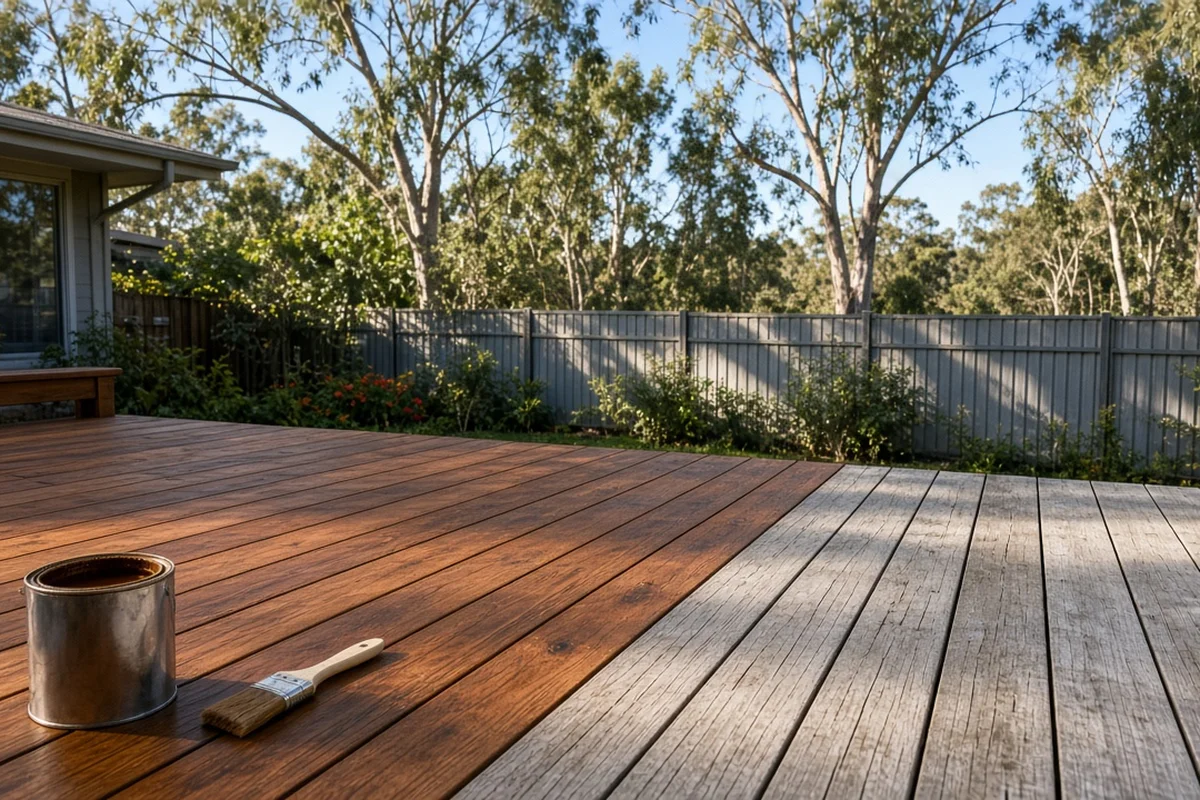
Adelaide summers are hard on outdoor timber. A deck that looked rich and warm a few seasons ago can turn grey, dry and splintery once the sun, heat and the odd downpour have had their go at it. When it is time to bring it back, most people get stuck on the same question. Should the deck be painted or stained?
There is no single right answer for every home. It depends on the timber, the condition of the boards, how much shade the area gets and what you want it to look like. This guide walks through the choice in plain terms so you can decide with confidence, or have a better conversation with a painter when you ask for a quote.
Why do decks in Adelaide wear out so quickly?
Timber is a natural material that moves. It takes up moisture, dries out, swells and shrinks. Here in Adelaide we get long runs of hot, dry days and strong UV, followed by cooler wet spells in winter. That cycle pulls at any coating sitting on the surface.
Horizontal surfaces also cop more than walls do. Rain sits on them, sun hits them square on, and people walk, drag chairs and spill drinks on them. That is why a deck usually needs attention well before the fence or the house walls around it.
What is the difference between paint and stain on a deck?
Deck stains and oils soak into the timber. They add colour and some protection while still letting the grain show through. Some are close to clear, others are tinted to give the wood a deeper tone.
Deck paint sits on top of the timber as a solid film. It hides the grain completely and gives you a flat, even colour, much like the walls of your house.
That one difference shapes almost everything else, from how the deck looks to how it wears and what is involved when you redo it later.
When does staining make more sense?
Staining or oiling is usually the go to when the timber is in reasonable shape and you like the natural look. Hardwoods common in Adelaide backyards, such as merbau and jarrah, are often finished this way because the grain is part of the appeal.
The big advantage is how it ages. A penetrating finish fades and wears down gradually. It does not usually crack or peel off in flakes. When it is time to freshen it up, the deck can often be cleaned and recoated without having to strip back a failing film.
The trade off is that a stained or oiled deck needs recoating more regularly, especially on the parts that get full afternoon sun.
When is painting the better choice?
Paint can be the right call when the deck has been patched with mismatched boards, when the timber is stained or marked in ways that will not clean up, or when you want the deck to match the house trim or a particular colour scheme.
It also suits areas that are more for looking at than heavy walking, such as steps edges, balustrades, pergola posts and handrails. Many homes end up with a mix, with stain on the walking boards and paint on the rails and posts.
The main thing to know is that paint on a walked surface will eventually wear through in the busy spots. When that happens, the loose paint needs to be removed and the edges feathered back before it is recoated, which makes later maintenance more involved.
Can you switch from paint to stain, or stain to paint?
Going from stain to paint is usually possible with the right cleaning and preparation. Going the other way, from paint back to a natural stain, is much harder because all the paint has to come out of the grain. If you are unsure which way to go, it is worth keeping that in mind. Starting with stain keeps more options open later.
What preparation does a deck need before coating?
Whatever finish you choose, the result depends on the prep underneath. A good coating on a dirty, wet or loose surface will not last. A typical deck preparation involves
- checking for loose boards, popped nails or screws, and soft or rotten timber that should be replaced first
- a thorough clean to remove dirt, mould, tannin stains and old greyed fibres
- sanding back rough or raised areas so the surface is smooth to walk on
- letting the timber dry out properly, since coating damp wood is a common cause of failure
- picking a dry spell with mild temperatures, because coating in harsh midday heat can make the finish dry too fast
New timber can also need some time to weather before it will accept a coating properly, especially oily hardwoods. A painter can check the boards and tell you whether they are ready.
Does shade or full sun change the choice?
Yes. A deck facing west that bakes in afternoon sun will wear differently to one under a pergola or big gum tree. Full sun fades colour and dries timber out faster. Shady spots can hold moisture and grow mould. Lighter colours stay cooler underfoot in summer, which matters if kids or pets walk on the deck barefoot. Darker tones can look striking but get hot in the Adelaide sun.
What about fences, pergolas and the rest of the outdoor area?
A deck rarely sits on its own. If you are planning to freshen up the deck, it is often a good moment to look at the fence, pergola, garage door and outdoor walls at the same time so everything ties in. You can see more about our fence painting and exterior painting services if you are thinking about the whole backyard.
Choosing colours for outdoor areas can feel tricky, so our guide on choosing the right paint colour for your Adelaide home may help you narrow it down.
Should I do it myself or hire a painter?
Plenty of people oil a small deck themselves, and that can work well if you have the time and the weather plays along. The harder parts are usually the cleaning, sanding and getting an even finish without lap marks, plus dealing with any old coating that is peeling.
A professional painter will assess the timber, recommend paint or stain based on its condition, handle the prep and apply the coats evenly. If you want to see what is involved, have a look at our deck painting services in Adelaide.
Common questions
Should I paint or stain my deck?
It comes down to the look you want and how much upkeep you are happy with. Stain or oil lets the timber grain show and soaks into the wood, so when it wears it fades rather than peels. Paint gives a solid colour and can hide tired or patched boards, but once it starts to wear on a walked surface it can chip and needs more prep to redo.
Can you paint over a deck that has been oiled or stained?
Often yes, but not straight away. The old oil has to be cleaned off or worn back, and the timber needs to be dry and sound so the new coating can grip. If paint goes over a slick oiled surface it is likely to lift.
How do I know my deck needs recoating?
Look for grey, dry looking boards, water soaking in instead of beading, splinters, or a finish that has worn through on the main walkways. Those are signs the timber is losing its protection.
Ready to bring your deck back to life?
If your deck is looking grey, rough or patchy, we are happy to take a look and talk through whether paint or stain suits it. Contact us for a free estimate, or request a quote and tell us a little about your deck and backyard.