
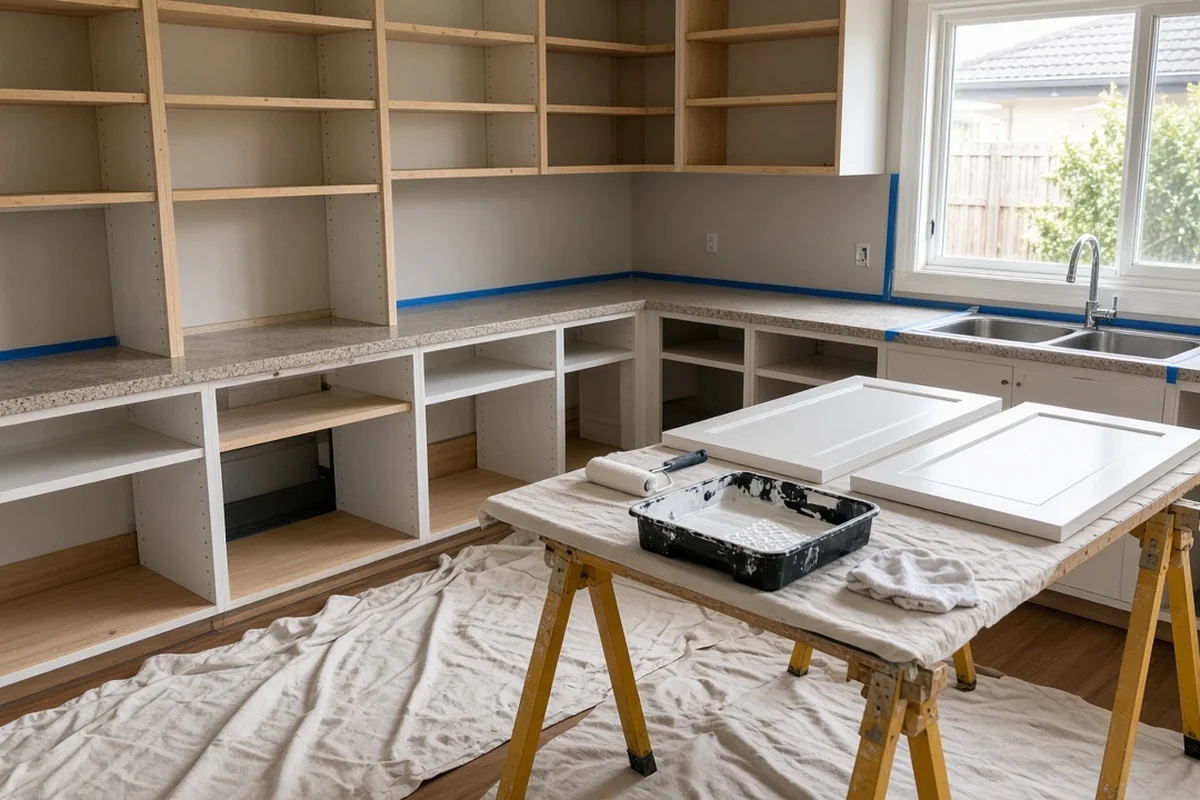
A dated kitchen is one of the most common reasons Adelaide homeowners start thinking about renovating. The layout works fine, the benchtops are still okay, but the cupboard doors are tired, yellowed or just a colour that belongs to another decade. Before pulling everything out, many people ask a simple question. Can the cabinets just be painted?
In a lot of homes the answer is yes. Painting cabinets can give a kitchen a fresh, updated look while keeping the parts that still work. This guide explains when cabinet painting makes sense, what goes into doing it properly, and what to think about before you get started.
Why paint cabinets instead of replacing them?
Replacing a kitchen means demolition, new carcasses, new doors, new benchtops and often plumbing and electrical work as well. It is a big job with a lot of disruption.
Painting keeps the existing structure and changes the part you look at every day. If the cupboards are solid, the doors open and close well and the layout suits you, painting can be a practical way to refresh the room without the mess and waste of a full rebuild.
Which cabinets are good candidates for painting?
Most cabinet materials can be painted with the right preparation. That includes
- solid timber doors, including older stained or varnished ones
- MDF doors, either flat or with a routed profile
- many laminate and melamine surfaces, using a primer designed to grip smooth finishes
- some vinyl wrapped doors, if the wrap is still firmly stuck down
Cabinets that are swollen from water around the sink or dishwasher, have bubbling or peeling wrap, or have doors that sag and will not stay aligned may need repairs first. Paint will not fix a door that is falling apart, so it is worth being honest about the condition before deciding.
What does proper cabinet painting involve?
Cabinets are handled and cleaned more than almost any other painted surface in the house, so preparation matters even more than it does on walls. A careful process usually looks like this.
- Doors, drawer fronts, handles and hinges come off so every edge can be coated evenly.
- Kitchens build up a film of cooking grease that paint will not stick to. Every surface needs a thorough clean.
- Dents, chips and old screw holes are filled and sanded smooth.
- A light sand gives the surface some grip for the primer.
- A bonding primer suited to the material helps the topcoat hold on, particularly on laminate.
- Thin, even coats of a hard wearing finish are applied, with light sanding between coats where needed for a smooth result.
- Once the paint has dried properly, doors go back on, hinges are adjusted and handles refitted.
Rushing any of these steps is where most cabinet paint problems come from. Skipping the degrease or the primer is the usual reason paint peels off around handles.
How do I choose a colour for my kitchen cabinets?
Start with the things you are keeping. Your benchtop, splashback, floor and appliances will all sit next to the new colour, so bring a sample door or swatch into the kitchen and look at it in both morning and evening light.
Soft whites and warm neutrals are popular because they keep the room light and work with most benchtops. Deeper colours like navy, forest green or charcoal can look great on lower cabinets or an island, especially paired with lighter uppers. If you are torn, our colour matching service and our guide on choosing the right paint colour can help.
What sheen works on cabinets?
Kitchen cabinets usually suit a satin or semi gloss finish. A little sheen makes the surface easier to wipe clean and tougher against fingerprints and splashes. Very high gloss shows every imperfection in the surface, while a flat finish marks too easily for a kitchen.
Can I paint my kitchen cabinets myself?
You can, and some people do get good results. The challenge is that cabinet painting is fiddly. Brush marks and drips are obvious on a door you see up close every day, and the prep takes patience. If the finish is not quite right, it can look more homemade than refreshed.
A painter used to cabinet work will have the setup to spray or roll doors evenly and the experience to choose the right primer for your surfaces. You can read more about our cabinet painting services in Adelaide.
Should I paint the rest of the kitchen at the same time?
Freshly painted cabinets can make tired walls, ceilings and skirting boards stand out. Many people take the chance to repaint the kitchen walls and ceiling at the same time so the whole room feels finished. If you are planning a bigger refresh, our interior painting services cover walls, ceilings, doors and trims, and our step by step interior painting guide explains how the work is usually done.
Common questions
Can all kitchen cabinets be painted?
Most can, including timber, MDF and many laminate or vinyl wrapped doors, as long as the right preparation and primer are used. Doors with peeling vinyl wrap, swollen water damage or broken hinges may need repairs or replacing first.
Will painted cabinets chip?
Any painted surface in a busy kitchen can mark over time, especially around handles and the bin cupboard. Careful cleaning, sanding, a suitable primer and a hard wearing finish all help the paint stand up to daily use.
Do I have to empty my kitchen?
You will usually need to clear the cupboards being painted and keep the area free while coats dry. Your painter will explain what to move and how the work will be set up so you can still use the house.
Want a fresh kitchen without a full renovation?
If your cabinets are sound but looking dated, painting them may be the simplest way to give your kitchen a new look. Contact us for a free estimate, or request a quote and send a few photos of your kitchen so we can talk through the options with you.