
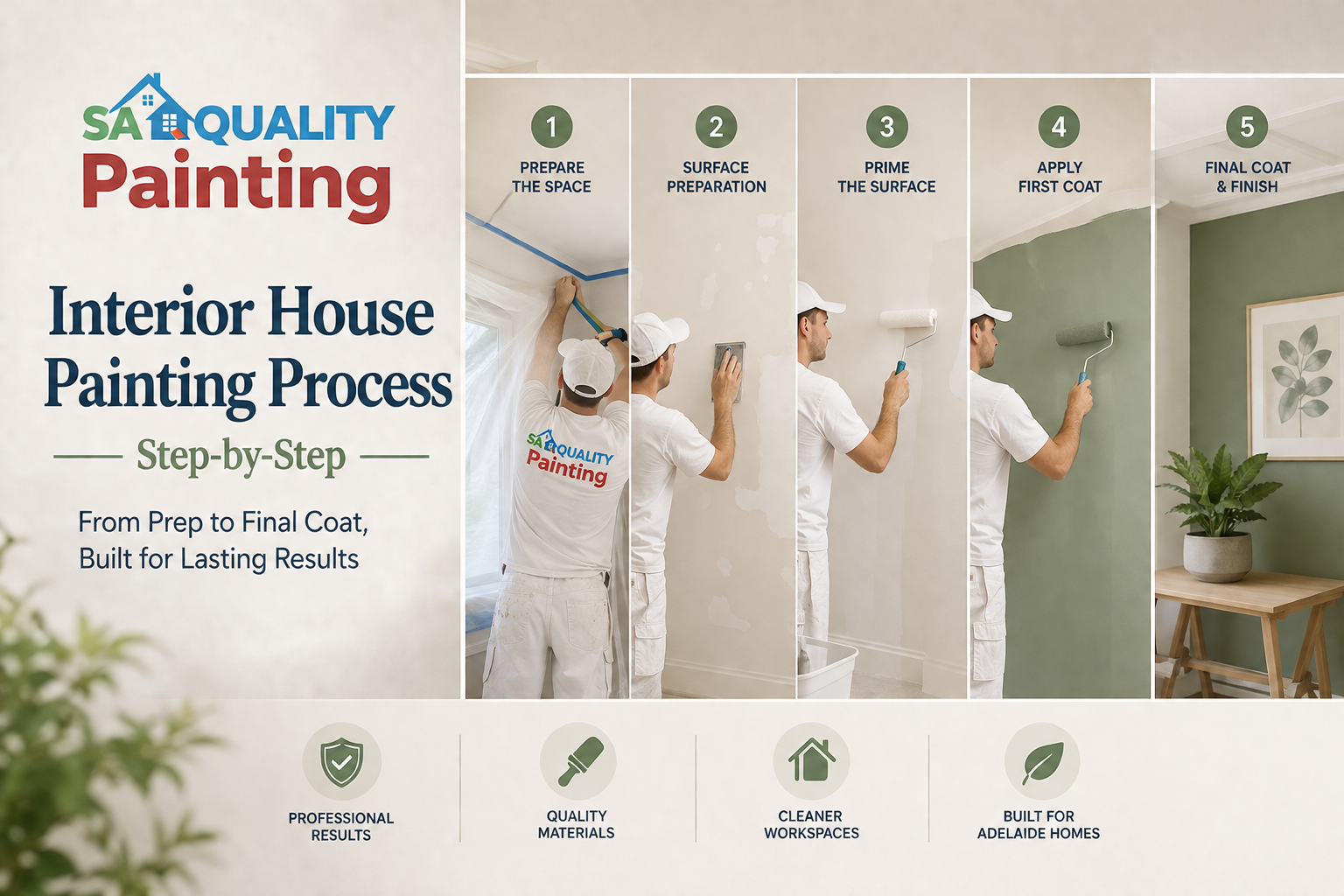
Most homeowners only ever see the last five minutes of an interior painting job: a roller gliding over a wall and a room that looks finished. What actually gets a wall from tired to freshly painted is a twelve-step sequence, and the order matters as much as the steps themselves. Understanding the full interior house painting process helps you know what to expect on the day, how long a room realistically takes, and what a painter should be doing before they ever pick up a roller.
The Full Interior House Painting Process, Step by Step
This is the sequence a professional interior painter in Adelaide typically follows for a standard room repaint, from the first drop sheet to the final walkthrough.
| Step | What Happens | Why It’s Done This Way |
| 1. Room clear & protect | Furniture is moved to the centre of the room or covered, and floors, skirting, and fittings are covered with drop sheets. | Protects belongings from dust, filler, and paint splatter before any prep begins. |
| 2. Wash & de-gloss | Walls are wiped down to remove dust, grease (especially in kitchens), and cobwebs, then lightly sanded if the old paint is glossy. | New paint won’t bond properly over grease film or a high-sheen surface. |
| 3. Fill & sand | Nail holes, hairline cracks, and dents are filled with putty, left to dry, then sanded flush. | Unfilled imperfections show up clearly once paint reflects light across the wall. |
| 4. Mask edges | Tape is run along cornices, skirting, window frames, and switches. | Keeps cut-in lines sharp without relying on freehand brushwork alone. |
| 5. Prime | Bare patches, stains, or colour changes get a primer or stain-blocking undercoat. | Evens out porosity and stops old stains or dark colours bleeding through the topcoat. |
| 6. Cut in | A brush is used to paint the edges along the ceiling line, corners, and trim before rolling. | Rollers can’t reach tight edges cleanly, so brushwork sets the boundary first. |
| 7. Roll first coat | The main wall area is rolled in manageable sections to keep a wet edge. | Working section by section avoids visible roller-overlap lines once dry. |
| 8. Dry & inspect | The first coat is left to dry fully, then checked in daylight for thin patches. | Recoating too early can lift the first coat rather than build on it. |
| 9. Second coat | A full second coat is cut in and rolled the same way as the first. | Gives even colour depth and covers any patchiness left by the first coat. |
| 10. Trim & doors | Skirting, architraves, and doors are painted separately, usually in enamel. | Trim uses a different, harder-wearing product to the wall finish. |
| 11. Unmask & clean | Tape is removed while paint is still slightly soft, surfaces wiped down, drop sheets cleared. | Pulling tape too late can peel dried paint away with it. |
| 12. Final walkthrough | Each wall is checked in natural daylight with the homeowner before the job is signed off. | Touch-ups are far easier to spot and fix immediately than after furniture goes back in. |
Why the Painting Order Can’t Be Skipped or Rushed
Each step exists because skipping it creates a problem two steps later. Painting over grease means the topcoat won’t adhere properly. Rolling before the primer has cured means the colour goes on patchy. Removing masking tape after the paint has fully dried risks tearing the finish along with it. A rushed one-day job usually means one or more of these steps has been shortened, and it tends to show up as a problem within the first year, not on the day itself.
Also Read: What’s Included in Professional Interior Painting Services in Adelaide
How Long Does Each Step Take?
For an average-sized room, prep and masking (steps 1 to 4) typically take longer than either coat of paint, especially in older Adelaide homes where walls need more filling and sanding. Drying time between coats is the other variable most homeowners underestimate, a coat that looks dry to the touch within hours may still need longer before it can safely take a second coat without lifting.
What This Means When You’re Comparing Painters
If two painters quote very different timeframes for the same room, ask which steps they’re including. A quote based on a single coat with minimal prep will always be faster and cheaper than one that includes full filling, priming, and two coats but the difference shows up in how the walls look and hold up over the following years, not in the invoice.
Frequently Asked Questions
How long does it take to paint the interior of an average room?
A single average-sized room with standard prep and two coats typically takes a full day, though older homes needing more filling and sanding, or colour changes needing extra priming, can take longer.
Can I skip priming if I’m using the same colour as before?
If the existing wall is in good condition and the colour isn’t changing, priming can sometimes be skipped over small filled patches only. Bare plaster, stains, and full colour changes still need it.
How long should I wait between the first and second coat?
This depends on the paint and conditions, but a coat that feels dry to the touch may still need several hours longer before it’s fully cured enough to take a second coat without lifting.
Why do painters cut in with a brush before rolling?
Rollers can’t reach tight edges along cornices, corners, and trim cleanly. Cutting in by brush first sets a sharp boundary that the roller then fills in across the rest of the wall.
Is it normal for painters to remove masking tape before the paint is fully dry?
Yes, tape is usually removed while the paint is still slightly soft rather than fully cured. Waiting until the paint is completely dry increases the risk of tearing the finish away with the tape.
Book a Proper Interior Repaint
SA Quality Painting follows this full sequence on every interior job across Adelaide, with no steps shortened to hit a faster timeline. Get in touch with SA Quality Painting Adelaide for an on-site assessment and a realistic timeframe for your rooms.