
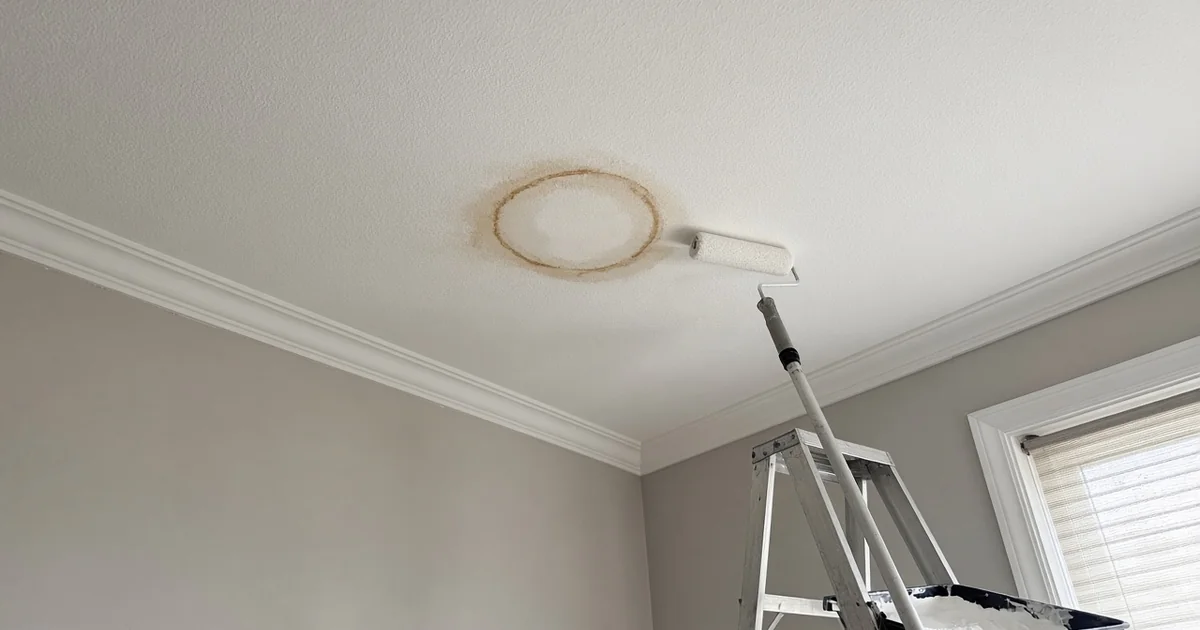
Water stains on a ceiling are one of the most common problems Adelaide homeowners notice. A brown ring often appears after a wet week. Sometimes it shows up after winter storms, sometimes above a bathroom or in a corner where the air never seems to move. The first instinct is to grab a roller and cover it up. In most cases that does not work for long, and the stain comes back through the new paint.
This guide explains why water stains on a ceiling return, what to check before you paint, how mould fits in, and when to call a painter. If you would like someone to look at a ceiling in your home, contact us and request a quote.
Why do water stains on a ceiling come back through paint?
A stain is the mark left by water that has soaked into the plasterboard and carried dirt and discolouration with it. Ordinary wall paint is not made to block those marks, so they bleed through the new coat, often within a day or two. If the moisture itself is still arriving, the stain will keep returning no matter how many coats go on.
That is why the order of work matters. Find the cause, fix it, let the area dry, repair any damage and only then think about painting. Skipping to the paint step is the most common reason a ceiling looks fine for a week and then looks worse than before.
What causes ceiling stains in Adelaide homes?
Every house is different, but a few causes come up again and again.
Roof and gutter problems
Cracked or slipped roof tiles, worn flashing and blocked gutters can let water into the roof space. Stains often show up after heavy rain, especially at the edges of rooms or around light fittings and vents.
Plumbing leaks
A slow leak from a pipe, a bathroom, a laundry or an upstairs room can leave a stain that spreads over time. If a stain is directly below a wet area and does not dry out, a plumber should check it.
Condensation and poor ventilation
Steam from showers and cooking can settle on cool ceilings, especially in bathrooms, kitchens and rooms with little airflow. Over time it causes dampness, discolouration and mould. Better ventilation and using extraction fans can help, and it is worth asking a tradesperson what suits your home.
What should you check before painting?
Work through these steps before any paint is opened.
- Find the source. Look in the roof space if it is safe to do so, check the gutters, and look at the room above. If you cannot find it, ask a roofer or plumber.
- Fix the cause. Painting does not stop a leak. The repair needs to come first.
- Let it dry fully. Plasterboard that is still damp will not hold paint properly.
- Check the plasterboard. Soft, sagging, bubbling or crumbling sections may need repair or replacement. Our drywall repair services cover patching and repairs before painting.
- Make sure the stain has stopped growing. If it keeps spreading after the repair, the water is still coming from somewhere.
What about mould on the ceiling?
Mould usually shows up as black, grey or green spots, often in bathrooms and corners. Paint does not kill it, and covering it only hides the problem for a while. The first step is to deal with the moisture that let it grow.
For small areas, many people clean the surface with a product made for the job and follow the instructions on the label, with good ventilation and protective gear. If the mould covers a large area, keeps returning, or anyone in the home has asthma or other health concerns, it is wise to get professional advice before you start cleaning or painting.
How do you paint over a stain properly?
Once the cause is fixed, the area is dry and any mould has been dealt with, a careful finish usually follows these steps.
- Clean the surface and remove any loose or flaking paint.
- Repair cracks, holes and damaged sections and sand them smooth.
- Apply a stain blocking primer made for ceilings, because ordinary paint will not hold a stain back.
- Add ceiling paint in thin, even coats, rolling in one direction to keep the finish consistent.
- Check the area after it dries. If the mark shows through, it may need another coat of primer before the final coat.
Stains and flaking paint on walls follow similar rules, and our post on why paint peels, bubbles and cracks explains how moisture damages paint in other parts of the home.
Should you paint the whole ceiling or just the stain?
A patch of fresh paint on an older ceiling often shows as a lighter or glossier square, especially in side light. If the ceiling has faded or the sheen is different, painting the whole ceiling, usually up to the edges of the room, gives a more even result. Our ceiling and cornice painting services can help with the whole ceiling and the edges where it meets the walls.
When should you call a painter?
Call a painter when the stain is large, the plasterboard needs repair, the ceiling is high or hard to reach, or you want the finish to blend in with the rest of the room. A painter can look at the damage, tell you what needs doing first and let you know when the surface is ready for paint.
If you are also planning to refresh the rest of the room, our interior painting service covers walls, ceilings and trims. Call us on 0415 605 744 or contact us and request a quote.
Frequently Asked Questions
Can you paint over a water stain on a ceiling?
You can, but only after the cause has been fixed and the area is completely dry. A stain blocking primer is usually needed, because ordinary paint lets the mark show through.
Why does the stain keep coming back after painting?
Most often the moisture source has not been fixed, or the stain was not sealed with a suitable primer. Either one can let the mark bleed through again.
Does paint kill mould on a ceiling?
No. Paint covers mould but does not remove the cause, and the mould can return. Deal with the moisture first, clean the mould safely and then paint.
Is a ceiling stain always a roof leak?
No. It can also come from plumbing, a leaking bathroom above, or condensation. If you cannot tell, a roofer or plumber can help find the source.
Do I need to repair the plasterboard before painting?
If the plasterboard is soft, sagging, bubbling or crumbling, yes. Paint will not hold on damaged sections, so they need patching or replacing first.
Can a painter fix a stained ceiling in my home?
A painter can prepare the surface, repair minor damage, prime and paint the ceiling once the leak is fixed. Use our contact page or call 0415 605 744 to talk about your ceiling.